
WATER
Our first and most important job as an organization is to provide our customers with clean and safe water. To do this, we draw and treat water from the Peace River located in DeSoto County. From our primary Facility there, we supply about 26 million gallons of water every day to our customers in Charlotte, Desoto, and Sarasota counties, as well as the city of North Port. That’s a lot of water, and Florida is known for having both wet and dry seasons. For this reason, our treatment Facility on the Peace River is surrounded by reservoirs—both traditional above-ground reservoirs as well as ASR. Together, these can hold up to 13 billion gallons of water, more than enough to meet our customer’s needs, even during the colder dry months with little rain.
Withdrawing water when the river is running high and storing it in reservoirs protects both the Peace River itself and also its connected estuaries and Charlotte Harbor. We store water, treat it and send it to our member governments.
Since 1991 we’ve been providing quality drinking water to our customers. Learn more about where our water goes on a daily basis and about how we’re working to ensure that we’ll continue in the future.
Our Water
Treatment and Storage
Our Peace River facility can treat up to 51 million gallons of drinking water per day. We currently supply about 26 million gallons daily. To ensure that our member governments have the water they need, we plan ahead. And, together we invest. And, we interconnect to ensure that we can help each other in case of emergency. Just take a look below and get all the details about our treatment and storage system:

Raw Water Reservoirs
Part of making sure that our customers are able to have the water they need year-round is keeping water in reserve. It’s not feasible to withdraw the amounts we need from the Peace River year-round during the dry season without parching the river, and so we withdraw more than we use in a day during the wet season, when the Peace River is running high. The water we take and don’t use during that time is then stored for the dry months. This keeps the water levels in the Peace River appropriate for the season. We store the excess water in two different places. The first are two aboveground reservoirs near the Authority’s water treatment facility on the Peace River. These reservoirs hold raw water, water that has been taken directly from the river, without being processed or filtered. You can find these types of reservoirs at many water treatment plants across the United States. The first reservoir was built in the 1980s and can hold up to 500 million gallons of water. Aboveground, it spans 85-acres. The second, larger reservoir was built much more recently in 2009, and it can hold an impressive 6 billion gallons of water. It covers 640 acres on the surface. These reservoirs work with the treatment facility on the Peace River. Together, they form a type of circuit. Each day, up to 120 million gallons of water move from Peace River through a pipeline to the larger second reservoir. From there, the water travels through an outfall tower to the smaller reservoir, where it is only then brought into the treatment plant proper, where it is becomes ready for consumption.
ASR System
In addition to our two aboveground reservoirs, we also have a special aquifer storage and recovery (ASR) system. This system is special and is what allows us to protect the Peace River and its estuaries beyond most other water treatment facilities in Florida. It provides a massive amount of storage and is what ensures that we will not overdraw the Peace River to meet customer’s needs. An aquifer is a layer of rock below the surface of the ground that holds water. An ASR system injects water directly into those layers of rock to be removed at a later time. Our ASR System has 21 wells spread across two fields. Two different layers of limestone can hold up to 6.3 billion gallons of water. When the Peace River is running high and full, between 5-15 millions gallons of clean drinking water are injected into the ASR from the Authority’s water treatment facility. During dry periods, we can recover between 5-17 million gallons through the reservoirs—leaving the Peace River undisturbed.
Water Treatment
At our facility on the Peace River, we use a conventional surface water treatment process that consists of several different steps: Coagulation and Flocculation: We add chemicals to water that help the contaminants within it to stick together. The water is then mixed to make these contaminants stick together even more. As these pieces cling together, they’re easier to remove. Sedimentation: We remove those grouped-together contaminants using a gravity filtering process.
Disinfection and Filtration: The water is then disinfected, removing or killing any remaining contaminants or harmful organisms. Finally, the water is filtered. Your water is now ready to drink!
Water Quality
We use water to clean things, but water must also be cleaned before it becomes safe for drinking. Our water is routinely tested for contaminants, but it also needs to be refreshing and delicious. In addition to maintaining an award-winning safe system for treating the raw water from the Peace River, the Water Supply Authority also won the statewide contest for Best Tasting Drinking Water in 2022. See for yourself by checking out the Authortity’s compliance monitoring, and water quality data reports included below:
Annual Drinking Water Quality Data Reports:
Quarterly Compliance Monitoring Reports:
2022
• Q1, 2022
• Q2, 2022
• Q3, 2022
• Q4, 2022
2021
• Q1, 2021
• Q2, 2021
• Q3, 2021
• Q4, 2021
The Loop System
The Authority has a 70-mile piping system to deliver water to member governments. We call it the Regional Integrated Loop. In addition, we have pipelines connected to community facilities that are not part of our member government. In this way, we help provide water security for the entire region. In case of emergency, we can provide water to the system and communities can provide water to one another. Like water supply, we’re continuing to expand our water delivery system.
Expansion
Phase 2B
Project Description:
The next expansion of the regional transmission system includes the Phase 2B Regional Water Transmission Pipeline. This 42-inch pipe extends the regional system 14 miles further west in Charlotte County, to the Englewood and Rotunda area to meet the growing water needs in West Charlotte County. Future extensions of the regional transmission system will be north through Englewood and Wellen Park to the Carlton Water Treatment Facility in Sarasota County. In the past 30 years, the Authority has expanded alternative water supply to include 6.5 billion gallons of off-stream reservoir storage, 51 million gallons per day of treatment capacity, and the largest Aquifer Storage and Recovery system in the eastern United States.
Project Need/Benefit:
The Phase 2B Regional Water Transmission Pipeline represents the next critical step in the expansion of the regional drinking water access for our customers. The project has the following benefits:
- Meets fast-growing water supply needs in western Charlotte County and supports the future extension of the regional transmission system north to the Carlton Water Treatment Plant in Sarasota County;
- Interconnects alternative water supplies providing regional connectivity and reliability in the Southern Water Use Caution Area Recovery Plan;
- Increases resiliency to drought, hurricanes, floods, and climate change, ensuring a highly reliable drinking water supply;
Questions?
2B@regionalwater.org
Phase 3C
Project Description:
The Authority’s regional transmission system features 80 miles of large-diameter pipe that interconnects the region. It’s a resilient and secure water supply for residents and businesses. In the last twelve years, our regional drinking water transmission system has expanded 36 miles. New pipelines in Sarasota, Charlotte, and DeSoto counties are meant to meet growing drinking water needs and provide the connections needed to maintain water supply during emergencies.
The Phase 3C Regional Water Transmission Pipeline is the next step. It will extend the regional transmission system 10 miles further north in Sarasota County to Fruitville Road to meet the growing water needs in northern Sarasota County and prepare for the final piece of the regional pipeline connection with Manatee County in the future.
Project Need/Benefit:
The Phase 3C Regional Water Transmission Pipeline is the next expansion to meet the needs of our customers. The project has the following benefits:
- Supports future interconnection of the two largest drinking water systems in the region – Manatee County and the Peace River Manasota Regional Water Supply Authority;
- Interconnects alternative water supplies providing regional connectivity and reliability in the Southern Water Use Caution Area Recovery Plan;
- Increases resiliency to drought, hurricanes, floods, and climate change, ensuring a highly reliable drinking water supply;
Questions?
3C@regionalwater.org
Peace River Regional Reservoir No. 3 (PR3)
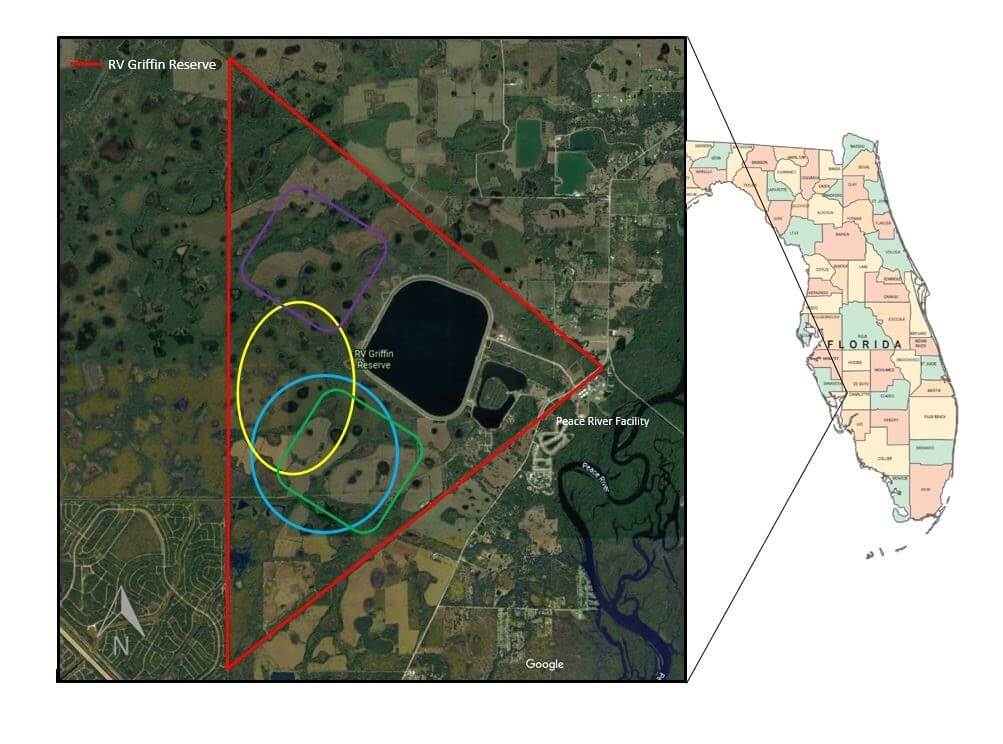
Project: Peace River Reservoir No. 3 Siting and Feasibility Study
The key to use of seasonally available surface water as a reliable public water supply is the ability to harvest and store large volumes of water during relatively short periods of availability. The Peace River facility utilizes off-stream raw water reservoirs, and an aquifer storage and recovery system to support use of supplies skimmed from the Peace River as an alternative water supply, reliably meeting much of the drinking water needs in the District’s southern water planning area. The Peace River Reservoir No. 3 Siting and Feasibility Study will evaluate conceptual sizing, siting, mitigation, operational drivers and associated facility requirements, such as raw water pipelines for a third off-stream reservoir and upsized river intake capacity for the Peace River Facility. The work will be in sufficient detail to enable updated project cost information and will lay the foundation for future decisions on design and construction the for the expansion of regional surface water supply capacity at the site. The project is supported by the Authority’s Water Use Permit (20 010420.010) issued February 26, 2019 which authorized increasing the maximum daily withdrawal from the Peace River from 120 MGD to 258 MGD to enhance the capture and storage of excess flows during the wet season which facilitates additional drinking water supply yield from this system, and the Authority’s Integrated Regional Water Supply Plan 2020 Update which identifies an additional 15 MGD in alternative water supply capacity development from the Peace River at this site.